
Training Resources
Practical training tips, short articles and literature resources to help you understand canine behavior, promote more effective training habits, and advance progress at home.
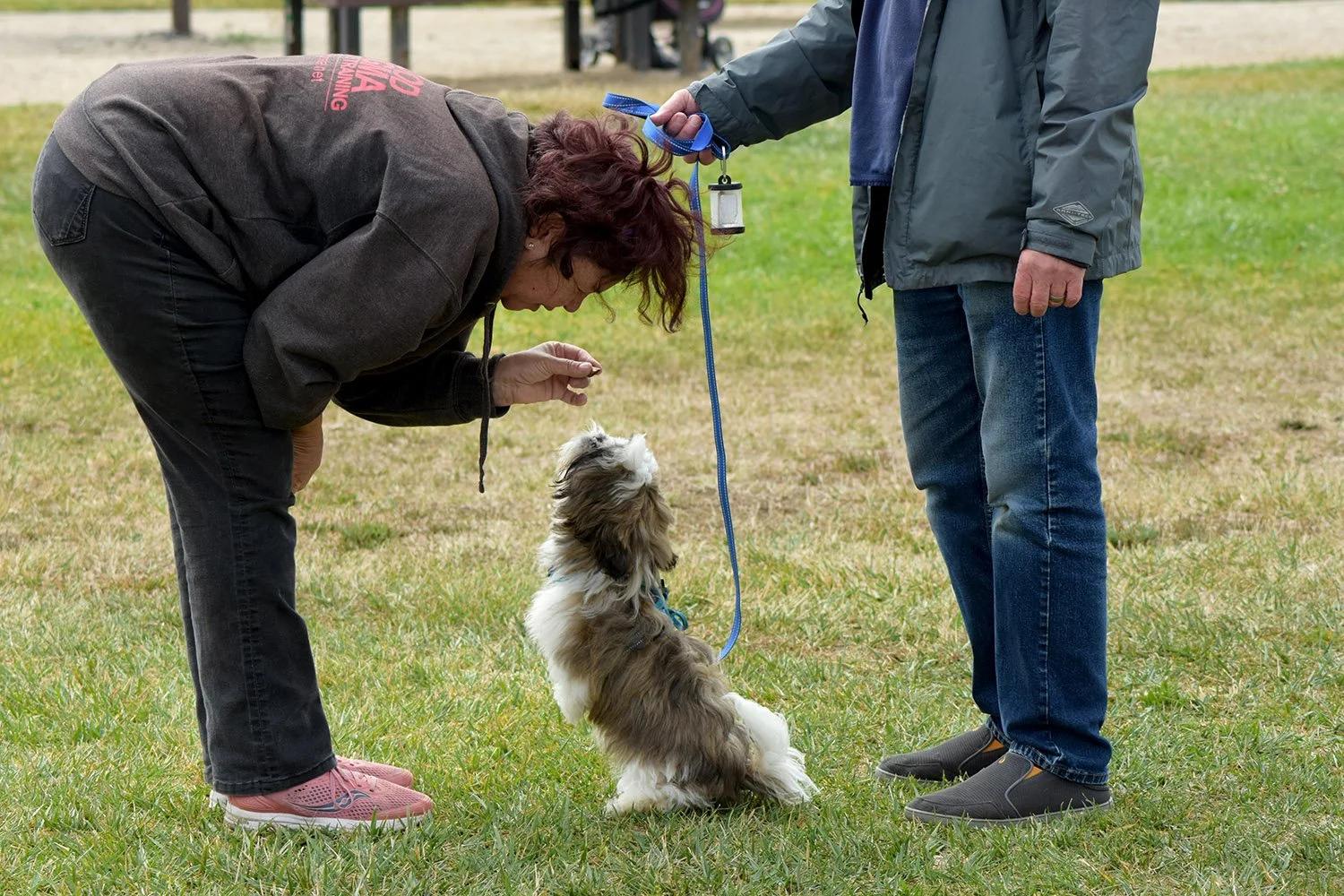
Quick Training Tips
Fairness and In Charge
Always be in the leadership zone with your dog: Calm, confident and benevolent. Anger, frustration and punishment are NOT part of training.
Leash your Dog
Use the leash, a standard 6’ or long 20’, when training. You want to be able to control your dog’s movement.
Positive Reinforcement
Always reward behaviors you want repeated. Don’t ignore when your dog offers the right response. When good choices consistently lead to something your dog values (food, praise, play), those behaviors become stronger and more reliable over time.
Short Training Sessions
Keep training sessions brief but consistent throughout the day. When your dog to gets bored and distracted learning stops, especially with younger dogs. 2-4 repetitions of different behaviors every few hours is ideal!
Routine
Keep a routine and structure the dog’s day as much as possible. Being consistent = training success. Without routine and structure, there is chaos and confusion.
No more “NO”
Eliminate the word “No” from your training vocabulary. It’s not a behavior and it’s often overused. Instead use a growly “eh!” and redirect the dog to do something different. Teach “drop it”, “come”, “leave it”, etc.
Behavior Modification
Instead of only correcting unwanted behavior, teach your dog an alternative behavior. Dogs are eager to learn new things, especially if there’s a high value reward in it for them! Clear direction and consistency create lasting change.
Patience!
Training is a process. Changing behavior requires consistent practice for both human and dog.
The Backyard Dog
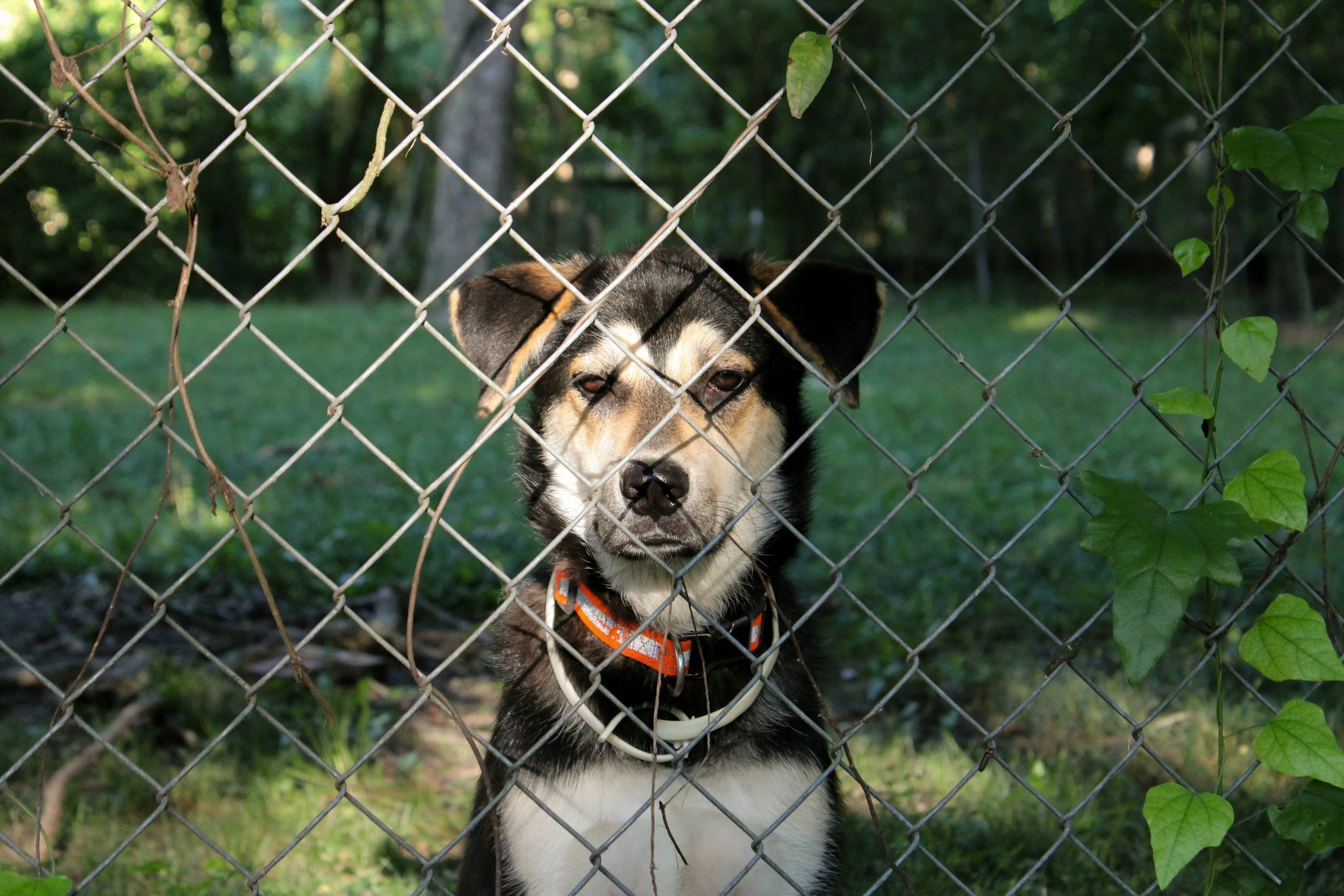
They are just about everywhere, in almost every neighborhood. A dog left alone in a backyard tethered to a tree, to the ground, or sometimes to a doghouse. Water and food bowls may be empty, absent or just beyond the dog’s reach. Isolated and captive, a backyard dog suffers. Dogs, like humans, did not evolve as solitary creatures; they are essentially pack animals and thrive in the company of others. As domesticated companion animals they need the connection that comes from the pack: you and your family.
They are the barking, whining, destructive dogs living in someone’s yard, trying their hardest to attract attention of any kind. Even getting someone to come outside and yell at them offers the reward of contact. People that consistently keep their dogs outside rationalize, saying they spend time with the dog when working in the yard, taking a walk or throwing a ball for a few minutes. Providing food, water and some engagement is not enough if once you’re back in the house, the dog is again isolated.
One of the most efficient ways for bonding to take place is for the dog to share your home with you. When your dog is alone, abandoned and living outside, they become stressed, anxious, bored and frustrated. In addition to destroying two of their strongest instincts: bonding and denning, these factors may also lead to illness, aggression and destructive behaviors.
All this is not to say that one must spend every minute catering to and entertaining the animal. Training will allow bringing them indoors to join the you, even if it is just lying nearby as you read or watch TV. Many times the dog may just curl up under your feet and sleep; otherwise, providing a fun, appropriate chew toy keeps them happy! The important thing to remember is that being incorporated into the family pack is both comforting and necessary for your dog’s mental and physical well being.
Articles
Deeper reads on behavior, learning, and building a better relationship with your dog.
Don’t Be A Bore
Providing play time and or play dates with other dogs also serves as an enrichment activity…
Drama and Trauma at the Vet Clinic
Several years ago I went back to dip my toes into the world of veterinary technician work…
No Means…What Exactly?
I’m starting to be very conscious of eliminating the word “command” from my training vocabulary…
I Call Your Name
How many times do you call out your dog’s name before you actually give an associated behavior?…
Notes to Self
A personal-style reminder list that reinforces patience, consistency, and realistic expectations.
It’s Shocking!
A perspective piece that challenges quick-fix thinking and emphasizes humane, effective training.
Recommended Reading Material
Any Book by:
Dr. Ian Dunbar
Dr. Bruce Fogel
Dr. Nicolas Dodman
Jean Donaldson
Also: Inside of a Dog by Alexandra Horowitz
Journals:
Dog Watch from Cornell University: (Click Here)
Whole Dog Journal: (Click Here)